Textiles · Material guide
Choosing Libeco Bath Towels: Weave, Weight, and Everyday Care
A towel is a small landscape of fibers: loops, ridges, and open spaces that meet water, skin, and air. Understanding how weave and fabric weight shape that encounter can help you choose a towel that suits your routine—and care for it so it remains useful for years.
Start with the job the towel must do
Some towels live beside a shower, ready for a quick daily dry. Others travel to a sauna, fold into a weekend bag, or wait near a pool. These tasks sound similar, but they place different demands on a textile. A bath towel used at home may be valued for its enveloping feel and capacity to take up water. A travel towel may need to pack small and dry between uses. A guest towel might be chosen as much for its hand and appearance as for its performance.
That is why “best towel” is not a single specification. Weave influences how the surface meets water and skin. Weight affects the textile’s substance, absorbency potential, and the time it may take to dry. Fiber, finishing, dimensions, room ventilation, and washing habits all matter too. Choosing thoughtfully begins with the conditions of use, not with a number or label in isolation.
Libeco’s Belgian towel offerings include linen foutas as well as a sateen-woven linen option. These are not conventional loop-pile terry towels, and their construction creates a different experience. A linen fouta can serve as a bath or guest towel, but also as a sauna wrap, beach layer, or light throw. The most useful comparison is therefore not whether one construction is universally superior, but how each suits a particular routine.
What weave tells you
Weave is the arrangement of yarns crossing over and under one another. Even when two textiles use the same fiber, different arrangements can create noticeably different surfaces. A towel’s weave affects texture, flexibility, the amount of air held near its surface, and how readily water can move into and through the fabric.
Loop pile: familiar, soft, and substantial
Most classic bath towels are made with terry, a pile construction that forms loops on one or both sides. Those loops increase the surface area available to contact water. Terry towels often feel plush and cushiony, and a deep pile can give a towel an immediately soft, substantial hand. The same height and density that create that feeling can also mean more fabric to launder and more moisture to release as the towel dries.
Not all terry towels behave alike. Loop height, yarn, density, and finishing vary. A dense, thick towel may feel luxurious but require more time and air circulation to dry fully. A lighter terry version may be easier to manage in a busy household. The presence of loops alone does not tell the whole story: construction and the conditions in which a towel is used matter together.
Flat and fouta weaves: lighter structure, versatile use
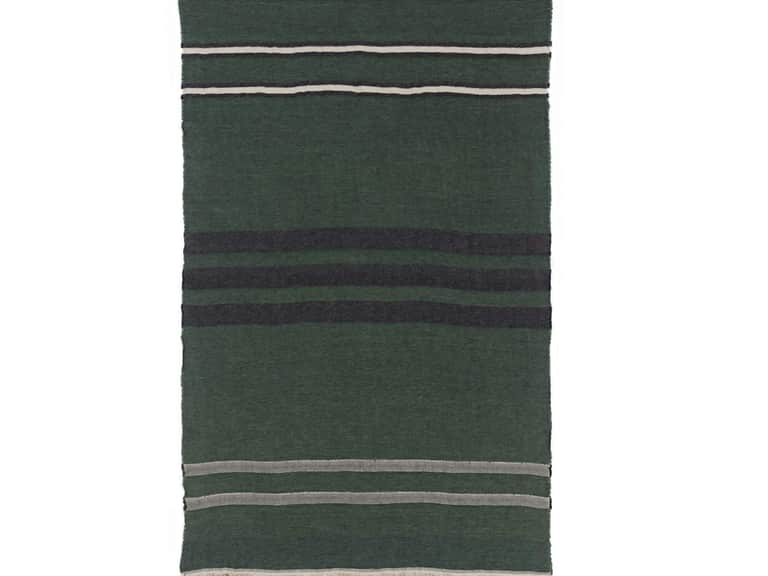
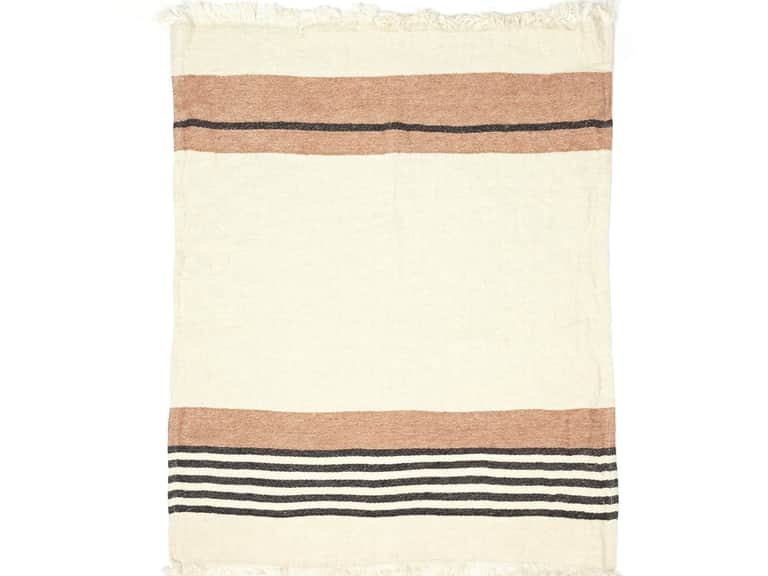
A fouta is generally a flatter woven towel, often recognized by its patterned bands or fringed ends. Without a deep terry pile, it can feel less padded against the skin and fold into a more compact bundle. That flatter construction can make it convenient for a gym bag, travel, a beach outing, or a sauna. It also presents a textile surface that can be used in more than one way—as a towel, wrap, or light cover—depending on its size and the maker’s stated use.
The Belgian Towel Fouta, for example, is described as a 100% linen towel with a washed finish, woven in Belgium from European flax yarn. Its fouta construction is intended for everyday and travel use, including as a beach or sauna towel, guest towel, or throw. The product information advises unfolding it before washing and avoiding an overloaded machine. Those details reflect an important practical point: a large, flat textile needs room to move through water and rinse properly.
A flat weave should not be assumed to absorb more—or less—than every looped towel. Absorbency depends on fiber, yarn, finishing, and construction, as well as how the fabric has been washed and used. The sensible comparison is to consider the whole textile and its intended role, then observe how it performs in your own setting.
Sateen: a smoother face and a different hand
Sateen is a weave structure that can produce a smoother, more fluid surface than a plain, visibly ridged weave. Libeco’s Belgian Towel Fouta Inyo is described as 100% linen, washed finished, and woven in a sateen construction. Its product description identifies it as multipurpose and suitable for the beach, sauna, or lounging. A smoother face can feel refined in the hand, but surface smoothness alone is not a reliable measure of drying speed or water uptake. Those qualities depend on the entire fabric, not just the name of its weave.
When comparing towel weave, look at construction alongside the practical information supplied: fiber content, care directions, dimensions, and the uses for which the towel is designed. Terms such as “fouta” or “sateen” are useful clues, not substitutes for the full description.
Weight: useful context, not a verdict
Fabric weight is usually expressed in grams per square metre (gsm) or ounces per square yard. It describes the mass of a given area of textile. In general, a heavier towel tends to feel denser or more substantial, while a lighter one is easier to fold and carry. Weight can also influence how much water a towel is able to hold and how long it takes to dry, but it does not determine either quality on its own.
Two towels with the same weight can feel different because they may use different yarns, weaves, finishes, and surface structures. A loop-pile towel and a flat linen towel are not directly comparable by weight alone: their yarns are arranged differently, and the shape of the textile changes its feel and behavior. Even a heavier towel may not be the more absorbent choice for a particular person or situation.
Use weight as one clue among several. If a towel will hang in a humid bathroom with limited airflow, consider how readily it can dry between uses and whether there is enough space to spread it out. If it will travel, ask whether its packed bulk and drying conditions are manageable. If you prefer a thick, enveloping feel, a more substantial construction may appeal—provided you can wash and dry it appropriately.
Product descriptions sometimes provide a weight, but a weight is not listed for every towel. Where it is not available, avoid guessing from appearance or from a related product. Instead, consider the stated weave, fiber composition, finish, dimensions, and care directions. These are concrete details that help form a realistic picture without implying performance data that has not been supplied.
Linen’s particular character
Linen is made from flax fibers. In a towel, it can offer a distinctly woven, natural texture rather than the deep softness associated with plush terry. Its hand may change with laundering and use, and small irregularities can be part of the material’s character. A washed finish, such as the one described for Libeco’s foutas, is intended to give the fabric a more relaxed feel from the outset.
Careful reading of fiber content is worthwhile. A towel described as 100% linen differs from a blended textile, even if both include linen in their names or appearance. The Belgian Towel Fouta and The Belgian Towel Fouta Inyo are described as 100% linen. The former is specified as a fouta weave and Belgium-woven with European flax yarn; the Inyo is specified as a sateen weave. Their shared fiber content does not make their constructions identical.
The Belgian Linen label, where stated, indicates a particular provenance and production claim in the product information. It should be understood as a description of origin and textile production, rather than a promise that every towel will feel or perform in exactly the same way. Even within a related collection, construction, pattern, finish, and intended use can differ.
For a reader deciding between these two formats, the distinction is practical. A fouta weave offers a flatter, adaptable form. The Inyo’s sateen construction offers a different surface and hand. Both are presented as multipurpose linen towels. The choice can turn on the way you plan to use the textile, the feel you prefer, and the care routine you can maintain—not on an assumption that one weave is categorically better.
A care routine that respects the fabric
Good care begins before the wash cycle. Check the instructions supplied with the specific towel, since care guidance can vary with construction and finish. Unfold a fouta before washing it, as the product guidance recommends. Give it room in the drum; an overloaded machine can restrict movement and make it harder for water and detergent to pass through the fabric.
Use a suitable wash temperature and a mild detergent when the care instructions call for it. The Belgian Towel Fouta’s stated directions allow washing up to 40°C, advise against overloading, and prefer line drying. The Fouta Inyo’s directions specify a cold, gentle machine wash with mild soap and advise against chlorine bleach. These differences are a reason to follow the instructions for the exact towel rather than treating every linen textile as interchangeable.
Detergent should be used in a sensible amount. Excess detergent can be difficult to rinse away and may leave residue in the fabric. Fabric softener is not automatically necessary; it can leave a coating on textiles, so follow the maker’s recommendations and consider whether your towel remains comfortable and functional without it. Avoid chlorine bleach where the product guidance says not to use it.
Drying is as important as washing. A towel needs enough air to release moisture. Line drying is recommended for both of these Libeco linen towels, with medium heat offered as an alternative for the Inyo if using a tumble dryer and for the fouta if using a tumbler. Avoid excessive heat and overdrying. High temperatures can place unnecessary stress on fibers, and overdried linen may feel harsher or more brittle than fabric removed when dry.
If ironing is wanted, the Inyo’s care information recommends steam while the linen is slightly damp. The general purpose of ironing is not to make a towel look factory-flat; many people prefer the relaxed character of linen. A light press can be useful for storage or presentation, but routine ironing is optional unless the maker advises otherwise.
After use, hang a towel so air can circulate around it instead of leaving it bunched on a hook or floor. In a humid room, spreading it over a broad rail may help it dry more evenly. A towel that remains damp for long periods can develop an unpleasant odor and may need laundering sooner. Ventilation and spacing are simple household habits with a meaningful effect on everyday freshness.
First washes and natural variation
New textiles may release some loose fiber during their first washes. The product information for the linen fouta describes initial lint as something that may occur, and recommends washing separately where directed. This is especially sensible for a new, textured towel: it helps keep loose fibers from transferring to unrelated laundry. Use an adequate amount of water and follow the care label rather than compensating with harsher washing.
Natural linen yarns can show subtle variations in texture. Such differences do not automatically indicate damage. On artisanal or linen textiles, small variations may be part of the material’s appearance. Still, a snag, open seam, or rapidly spreading hole is different from a harmless yarn variation. If a textile develops a structural problem, inspect it gently and seek appropriate repair before the damage grows.
Keep towel storage dry and avoid pressing damp pieces into a tightly packed cupboard. For seasonal storage, wash and dry the textile completely, then fold it in a clean, dry space. These uncomplicated steps reduce the chance that moisture or lingering residue will affect the fabric while it is put away.
Matching a towel to an ordinary day
Imagine a towel beside a shower in a compact bathroom. There may be little room to hang a heavy textile fully open, and the room may not have strong ventilation. A flatter linen fouta could be worth considering because it folds compactly and has uses beyond the bath. The advantage is practical only if its texture and drying performance suit the user; those preferences are personal and are best judged from the fabric’s stated construction and, where possible, direct handling.
For a household that prefers a cushioned, enveloping towel, a traditional terry construction may feel more familiar. Its loops provide a different surface and a plush sensation. It may also occupy more space and require adequate drying time. The decision is a trade-off between tactile preference and the realities of laundry, storage, and room conditions.
For travel, a multipurpose towel can earn its place by working across settings. The 100% linen Belgian Towel Fouta is described as suitable for everyday use, travel, the beach, sauna, guest use, or as a throw. Its care instructions include unfolding before washing, avoiding an overloaded machine, and line drying where possible. The Belgian Towel Fouta Inyo is a 43-by-71-inch linen piece with a washed finish and sateen weave, described for beach, sauna, or lounging. These are examples of how one textile can bridge settings, not evidence that it will be the perfect choice for every bath routine.
In a guest bathroom, appearance and ease of care may carry equal weight. A towel that can be washed using a straightforward routine and dried properly is more likely to remain ready for use. Whether the desired effect is a smooth surface, a woven stripe, or a soft, relaxed finish, the useful question is how the towel will be maintained after the first impression has passed.
A concise buying checklist
Before choosing among Libeco bath towels, work through a few practical questions. They help keep attention on evidence and everyday use rather than on a single impressive-sounding specification.
- What is the main use? Decide whether the towel is primarily for bathing, travel, sauna, beach, or guest use.
- Which surface do you prefer? Compare the feel of loop pile with a flatter fouta construction or a smoother sateen weave.
- What does the fiber label say? Check whether the towel is 100% linen or a blend rather than inferring content from its name.
- Is weight provided? Use a listed weight as context, but do not treat it as a complete measure of absorbency or drying time.
- Where will it dry? Consider the available rail space, room ventilation, and whether you can line dry it.
- Are the care instructions workable? Check washing temperature, detergent guidance, tumble-drying limits, and any instruction to wash separately.
- Will it serve more than one purpose? A multipurpose fouta may be useful when a textile must move between home, travel, sauna, or beach.
The lasting measure is use
Weave and weight offer a map, but the everyday life of a towel is the terrain. A lofty loop-pile towel may feel welcoming after a bath; a flatter linen fouta may suit a bag, a sauna bench, or a warm afternoon outdoors. A sateen surface may appeal to someone who wants a smoother hand. None of those preferences can be reduced to one number.
For a considered choice, read the construction and care information together. Think about where the towel will hang, how often it will be laundered, and whether you prefer a plush or more woven feel. Then give the fabric simple, consistent care: wash according to its instructions, avoid unnecessary heat, allow it to dry with airflow, and store it only when fully dry.
These habits do not promise that every towel will remain unchanged. Textiles soften, crease, and acquire the marks of use. The aim is more modest and more durable: to choose a towel suited to its work, and to care for it in a way that preserves its usefulness. In a bathroom, at the water’s edge, or folded for a journey, that balance of construction and care is what makes a textile part of daily life.